
 Back
More Books, Especially for Listening
Rumors that the book is dying are clearly exaggerated. So say Håkan Rudels, CEO for Bonnier Books, and Niclas Sandin, CEO for the digital book service BookBeat. But the book industry is facing big changes, something both of them look forward to with confidence.
Let’s start with some hard facts. The book industry is moving forward. According to data from the Swedish Booksellers Association and the Swedish Publishers Association, Swedish book sales increased by 6.2 percent during the first half of 2018 compared to the previous year. The increase can be explained primarily due to a strong rise in sales of digital subscription services. These increased during the same period by 36.9 percent.
“Audiobooks are very successful for a number of reasons,” says Håkan Rudels, CEO of Bonnier Books. “Accessibility means the bar is very low for trying them out.”
“Everyone can, at the touch of a button, start things up in a mobile phone and immediately listen to a story that he or she is interested in,” emphasizes Niclas Sandin, CEO for the digital book service BookBeat.
Today, an estimated 500,000 people in Sweden pay each day for some kind of digital service. These people consume over 20 hours of books each month and pay an average of nearly SEK 2,000 yearly.
“For an industry that’s undergoing a transformation, it’s a great situation to be in,” says Sandin. “People both consume and pay for audio- and e-books.”
BookBeat started in 2015 and is available in Sweden, Finland, Germany and the U.K. It’s come furthest in Sweden and Finland, but during 2019 the focus is primarily on growing in Germany.
“When we started BookBeat, this type of service had been available in Sweden for ten years,” says Sandin. “Our success proves that there’s room for more players, that it’s even better with more, since the total market grows more then. In Finland we launched the audiobook service the same time as competitor Storytel, which also helped us both. The launch in Germany will be exciting. So far, some 45 percent of audiobook consumption is on CDs.”
Even though the audiobook trend looks strong, both Rudels and Sandin see big challenges with changes for the book market.
“The industry is more fragmented today than previously,” says Rudels. “When I grew up in the 70s and 80s, everyone watched Dallas on TV. Today, you get fantastically high-quality entertainment regardless of where you are. This battle for people’s time affects literature most of all. Books are measured against an array of choices that are of better quality than before, and are cheaper. Our answer must be raising the quality of everything we do. It’s not as easy to publish volume No. 17 in the same series and then sell 50,000 books. We need to be sure to ‘stick to the basics’ – that is, publish the best stories and market them in the best way.”
So, how do you market books when the traditional ways, through author interviews and reviews, are no longer as successful?
“Today, we reach fewer people through those outlets,” says Rudels. “The biggest nut to crack is what we do instead. Today, we work in a more fragmented fashion, with lots of small initiatives, while earlier we had one or two main tacks for a release. The actual content of the books we can handle. The biggest challenge for the industry is discoverability, how do we make sure we’re seen.”
This is particularly true for the e-book, which exists in the shadows in Sweden, while reaping great success in the U.S. Despite Swedish book publisher Bonnierförlagen having 8,000 e-book titles in its catalog, significantly more than its 1,700 audiobook titles, the e-book makes for only some 10 percent of consumption.
“It’s of course because there isn’t any bigger advantage with an e-book compared to an audiobook,” Rudels believes. “You can do something else altogether while you listen to an audiobook, but not while you read an e-book. And an e-book doesn’t have a lot of advantages to offer over a print book, actually.”
Nonetheless, Niclas Sandin thinks that e-books will get bigger.
“The advantage of an e-book is that you can always take with you as many books as you want,” he says. “When Amazon launched its e-reader in the U.S. a decade ago, it became a catalyst to jump-start a whole new market. What happened was that the e-book grew enormously. Now there are e-readers, tablets and smartphones on the Swedish market, which set a foundation for the e-book to grow, even if it won’t have the same boost as in the U.S., where it was innovative 10 years ago.”
Håkan Rudels adds that Bonnier Books doesn’t care how people read.
“We have no opinion on how people read our books. We were early to decide this in Sweden. We’ve never said that a book should be a physical book, an audiobook or an e-book.”
For crime, consumption will soon be 50 percent digital, while the physical book is stronger when it comes to literature as a “personal brand” marker, gift books, etc.
“Without being nostalgic, it could happen that ‘tactile reinvented’ becomes popular,” says Rudels. “There’s something about a physical book that resonates with sustainability and quality. Considering this, things are bubbling when it comes to the physical book.”
Both Rudels and Sandin are fundamentally optimistic about the future of the book.
“We’re not writing eulogies for the book when it’s obviously something people want and will pay for, even digitally,” says Sandin. “Which is not to say there aren’t big issues to deal with: What will the transformation look like? How will it affect compensation levels? How can we find new customer groups? We want to learn to understand the customers and make sure that everyone has a relevant book in his or her hand – or ear.”
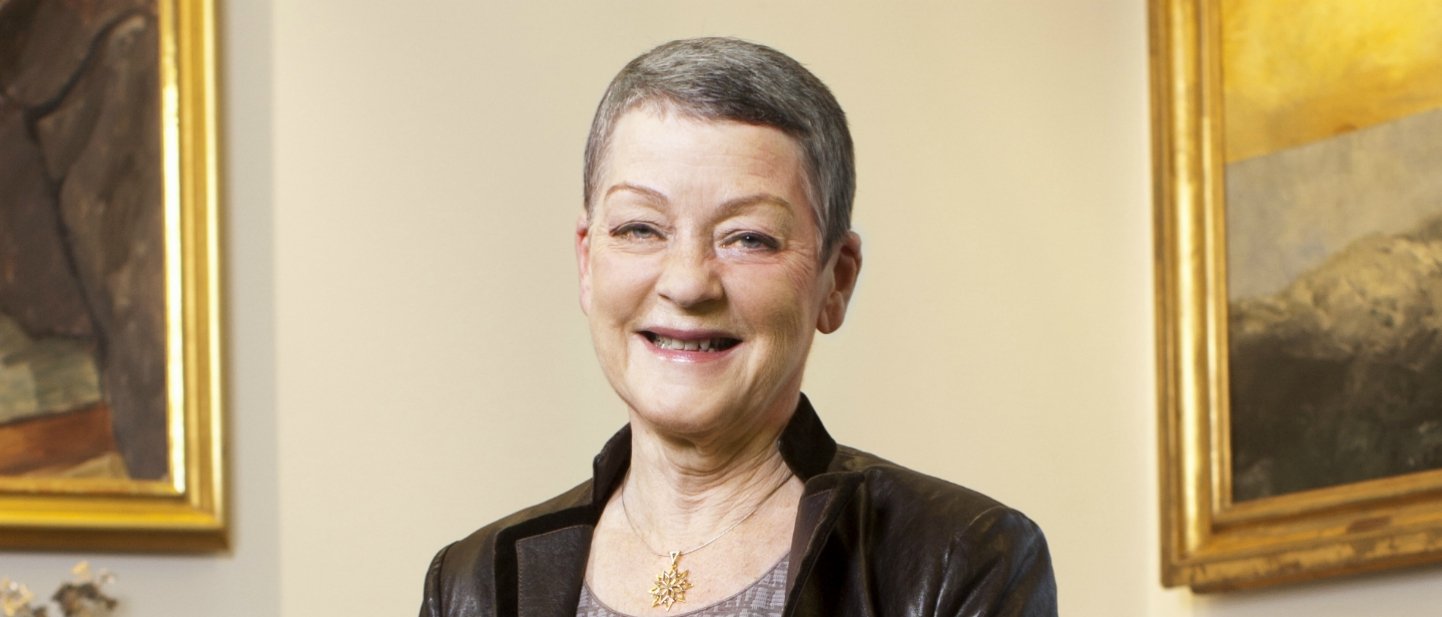
Publishing Present and Past: Eva Bonnier
Publisher at Albert Bonniers Förlag, Eva Bonnier started Sept. 1, 1975 at Bonniers Juniorböcker. She served for many years as publisher of the late Nobel Prize-winning poet Tomas Tranströmer.
How has the book industry changed since you started?
– Tremendously. There’s been a colossal increase in tempo. Digital development has arrived. Then, we wrote and released in paper- When we got a fax machine it was insanely modern. Writers didn’t have agents. The industry was more collegial and writers more loyal to publishing houses. Today, competition is higher for certain authors.
How is the industry the same?
– The basic work as a publisher hasn’t changed. I read my writers’ manuscripts and nurture relations with them. The alpha and omega is caring about writers, both when they write and when they don’t write, to be interested, to be there for them.